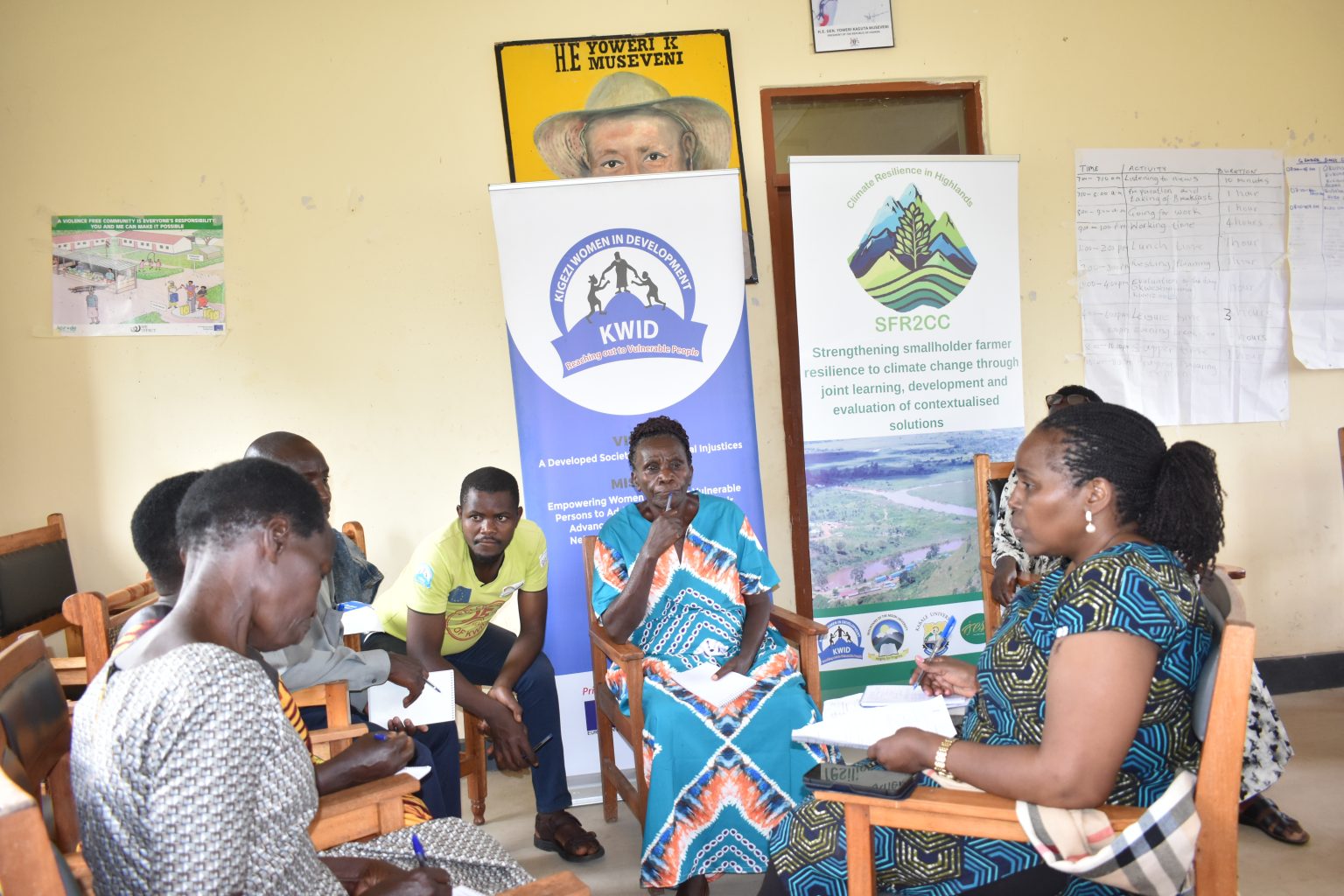
The project “Strengthening Smallholder Farmer Resilience to Climate Change through Joint Learning, Development and Evaluation of Contextualised Solutions (SFR2CC)” is a multi-institutional initiative implemented in the Rwenzori and Kigezi highland regions of Western Uganda. These highland ecosystems play a critical role in climate regulation, river system recharge, and national food production, yet they face increasing pressure from deforestation, soil erosion, weak water management, and climate change impacts. Smallholder farmers, particularly women who rely heavily on rainfed agriculture, are among the most vulnerable to these environmental stresses.
Coordinated by Mountains of the Moon University (MMU) and Kabale University (KAB), with support from Joint Effort to Save the Environment (JESE) and Kigezi Women in Development (KWID), the SFR2CC Project bridges the gap between science, education, and rural farming practice through participatory research, joint learning, and inclusive innovation.
The project strengthens institutional and community capacity through stakeholder-driven curriculum development, establishment of a gender-responsive research agenda, and co-development of low-cost water harvesting and conservation technologies with farmers. It also creates a multi-stakeholder knowledge-sharing platform linking universities, farming communities, policymakers, and development actors. Strong emphasis is placed on gender inclusion, with women forming at least half of the project beneficiaries.
Through education reform, applied research, farmer-led innovation, and wide knowledge dissemination, SFR2CC enhances climate resilience, water security, and food system sustainability in Uganda’s highland regions. The project directly contributes to Sustainable Development Goals 2 (Zero Hunger), 6 (Clean Water and Sanitation), 13 (Climate Action), and 17 (Partnerships for the Goals).