Kabale University, in partnership with BOKU University’s Institute for Hydrology and Water Management (Austria), has registered major milestones in advancing Integrated Water Resources Management (IWRM) in Southwestern Uganda under the KI-WATER 365 Project. Supported by the Austrian Development Cooperation (ADC) through the APPEAR Programme, the project is strengthening research, teaching, and community-based practices for sustainable water management in one of Uganda’s most critical highland ecoregions.
The Kigezi Highlands play a vital role in regulating river systems, climate processes, and regional water flows. However, the region is increasingly affected by environmental degradation, land-use pressure, and climate variability. Through the KI-WATER partnership, Kabale University is building local scientific capacity in data-driven water resources management, integrating modern hydrological science into academic training and applied field research.
Enhancing Research Infrastructure and Practical Training
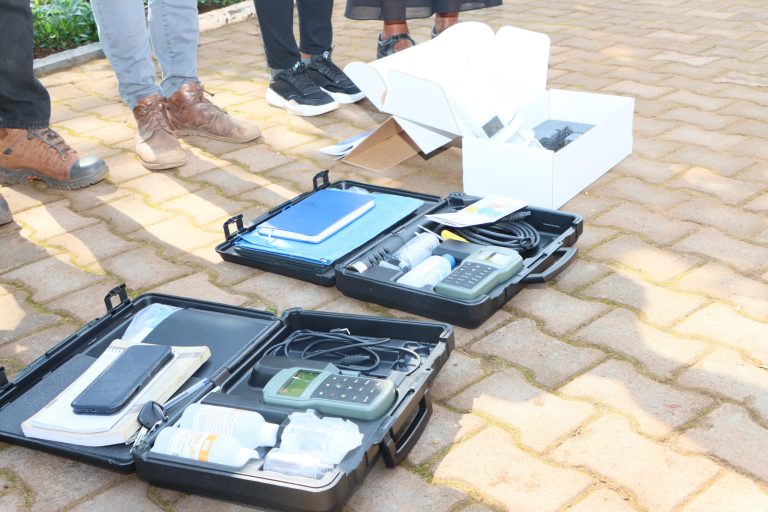
A major milestone of the collaboration was the official handover of state-of-the-art hydrological research equipment to Kabale University’s Department of Environmental Sciences. The equipment, which includes an automated weather station and high-precision water-testing meters, significantly strengthens the University’s capacity to monitor hydro-climatic and water quality parameters across selected sub-catchments in the Kigezi region.
These tools enhance both academic instruction and applied research, empowering students and academic staff to generate reliable hydrological data for environmental planning, policy development, and climate adaptation.
Stakeholder Engagement Through Inception Workshop
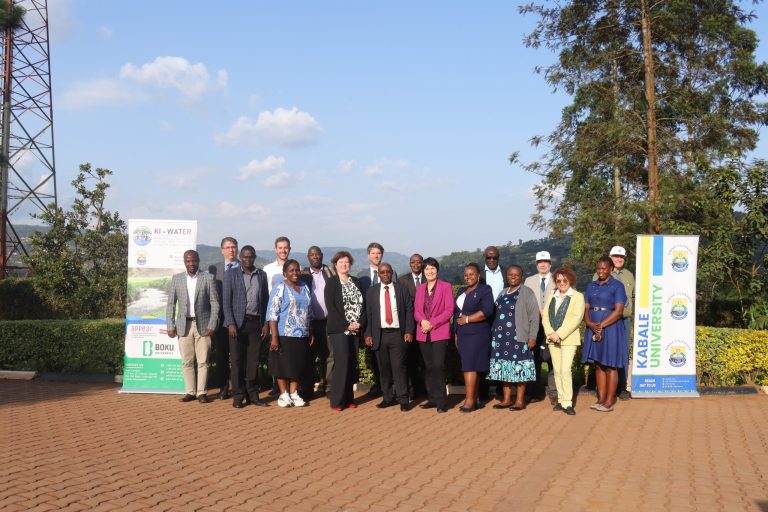
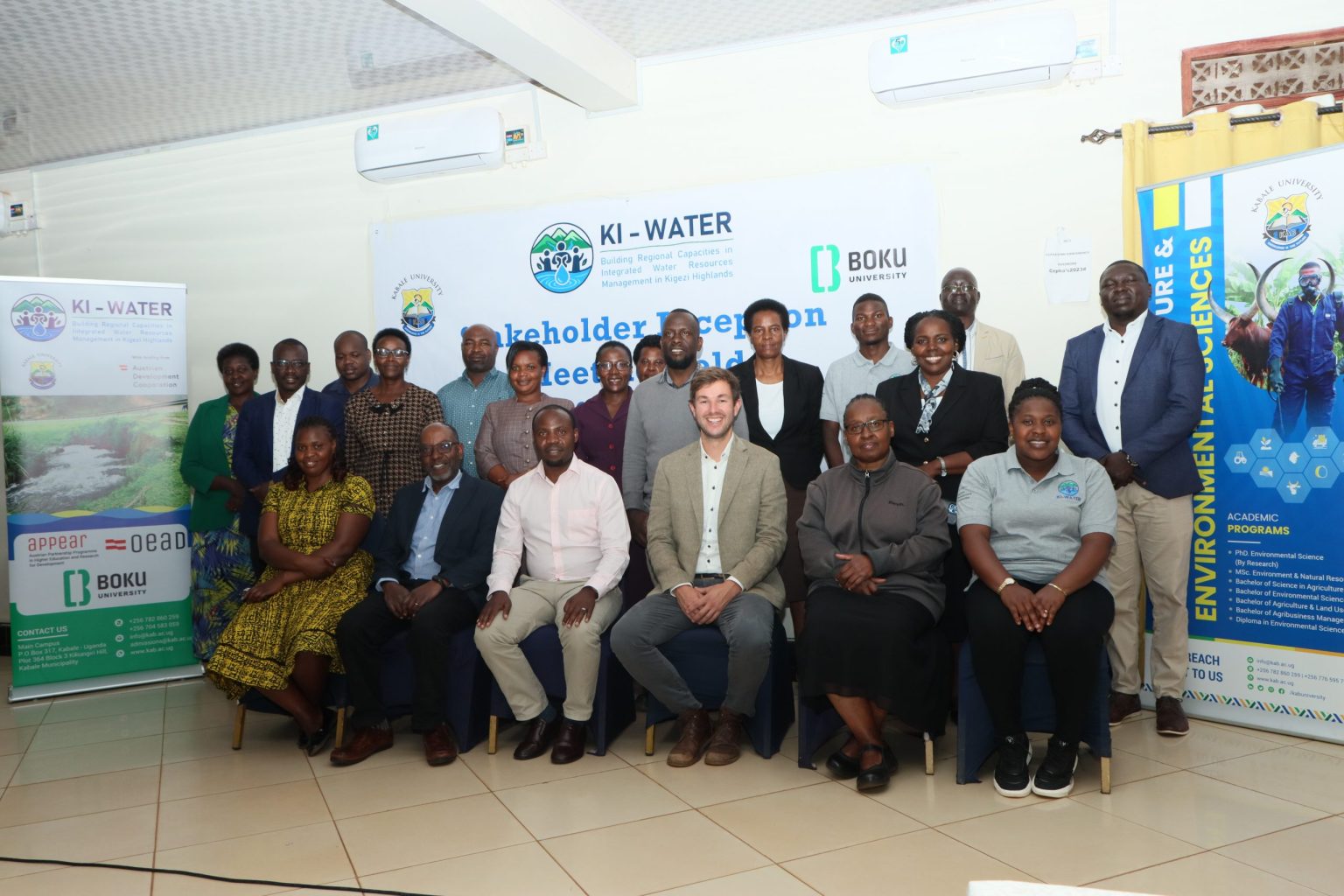
An inception workshop held at Cephas Inn, Kabale, brought together over 25 stakeholders, including district water officers, local government representatives, NGOs, farmers, and student researchers. The workshop focused on refining the project’s objectives, clarifying institutional roles, and promoting inclusive participation in the development of community-based and climate-resilient water management strategies.
Stakeholders reaffirmed their commitment to work closely with the project team to strengthen Integrated Water Resources Management (IWRM) across the Kigezi Highlands, emphasizing the importance of community ownership and institutional collaboration.
Field Missions and Hands-On Hydrological Training
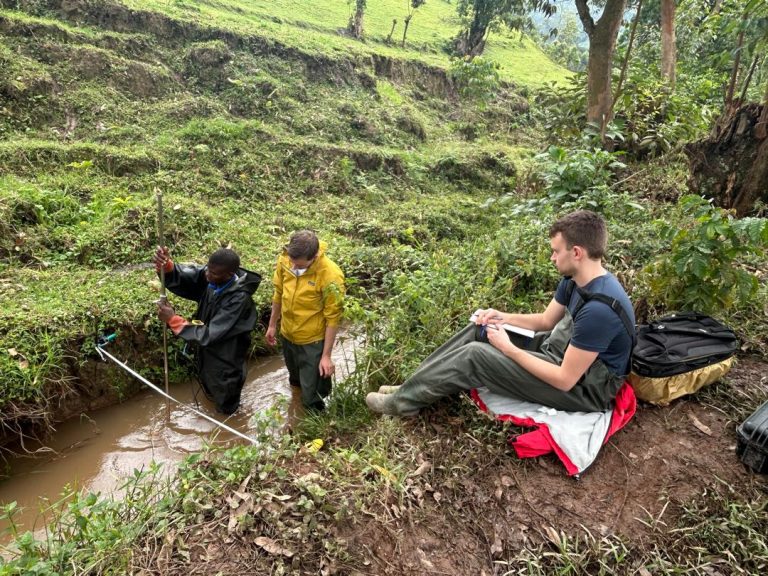
Field missions to the Maziba and Ruhezamyenda sub-catchments provided practical opportunities to assess hydrological conditions and conduct initial tests of the newly installed monitoring instruments. These visits offered hands-on training for Kabale University staff and students in hydrological monitoring, calibration, and data collection.
The demonstrations confirmed the proper functioning of all equipment, laying a strong foundation for consistent environmental data acquisition to support teaching, research, and community outreach.
Strengthening Academic Exchange and Knowledge Transfer
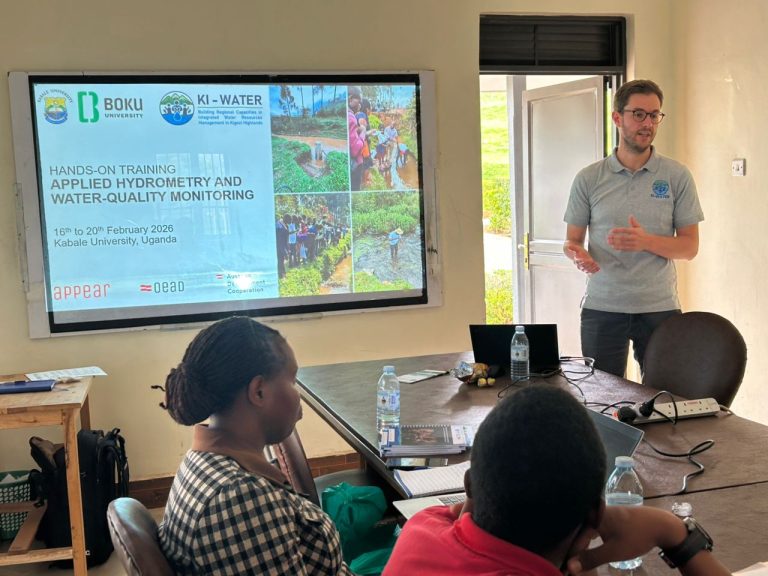
During his visit, Mr. Gabriel Stecher, a hydrologist from BOKU University, delivered an engaging lecture titled “Discharge Measurement – Salt Dilution” to second-year Environmental Science students. The session introduced tracer-based and salt-dilution techniques used in streamflow measurement and hydrological analysis, reinforcing field-based training in IWRM and integrating global expertise into Kabale University’s curriculum.
Structured Project Outcomes for Long-Term Impact
The KI-WATER Project (July 2025 – June 2027) is structured around three key work packages:
- Work Package 1: Improved scientific knowledge and consistent geo-databases on water quality and hydro-climatic conditions in the Kigezi Highlands.
- Work Package 2: Enhanced teaching and research capacities in IWRM through improved laboratory and field equipment at Kabale University.
- Work Package 3: Strengthened stakeholder awareness, transparency, and publicly accessible data repositories for sustained learning and decision-making.
Beyond technical research, the project promotes community awareness through workshops, school outreach programmes, and open-access data sharing. By linking scientific knowledge with policy and practice, the KI-WATER 365 initiative contributes directly to Uganda’s progress toward the Sustainable Development Goals, especially SDG 2 (Zero Hunger), SDG 3 (Good Health and Well-being), SDG 6 (Clean Water and Sanitation), and SDG 13 (Climate Action).
A Model for International Scientific Collaboration
This growing partnership between Kabale University and BOKU University demonstrates how international academic collaborations can catalyse local innovation, build institutional capacity, and strengthen community resilience. By integrating research, education, and community engagement, the KI-WATER 365 Project is laying a strong foundation for long-term environmental stewardship and sustainable water governance in Uganda’s highland ecosystems.